
If you’re building a new driveway on a mountain property in Colorado, the short answer is yes. Every county in Mountainside’s service area requires a driveway permit before you break ground on new construction. And every single one has different rules.
Grade limits, culvert specs, minimum widths, fire access requirements, engineering reviews, fees, and processing timelines all vary depending on which county your property sits in. Get it wrong and you’re looking at failed inspections, construction delays, and rework costs that can add thousands to a project that was supposed to be straightforward.
Here’s what each county actually requires, pulled directly from current county documents and fee schedules.
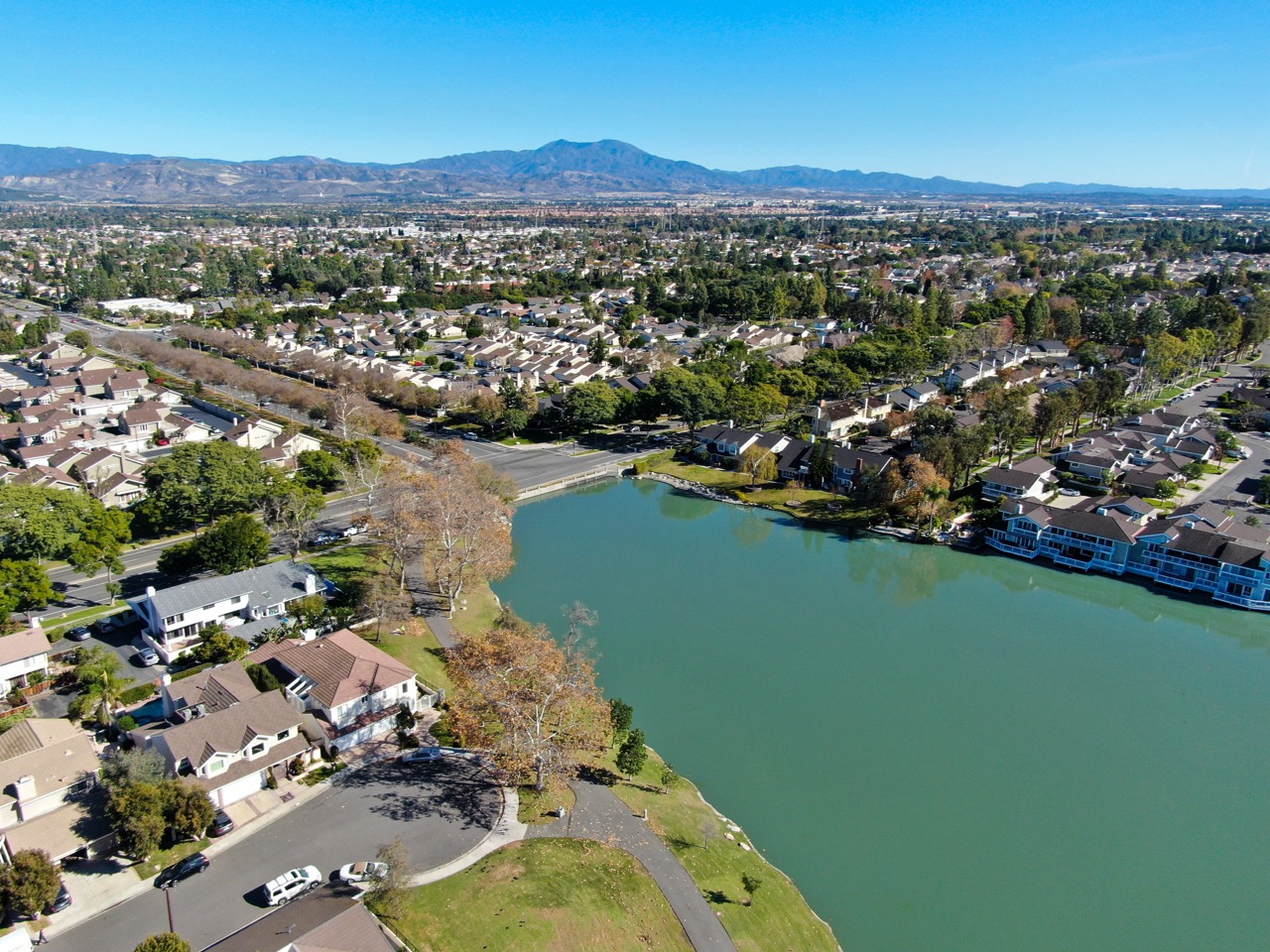

Jefferson County
Jefferson County issues driveway Access Permits through the Planning and Zoning Division, with field inspections handled by Road & Bridge. A permit is triggered any time you’re building a new driveway or modifying an existing one within 15 feet of a public road (25 feet for arterials).
The maximum grade for single-family driveways is 10%. Driveways can go up to 15% for sections no longer than 100 feet, but only if the home is equipped with an NFPA 13D sprinkler system. Private streets serving multiple dwellings get a separate 12% allowance on south-facing slopes. The minimum culvert size is 15-inch CMP (16-gauge), and the pipe must extend at least 2 feet beyond each side of the driveway with 4 inches of granular cover on top.
If your project adds more than 10,000 square feet of impervious surface, modifies existing drainage ditches, or sits in a floodplain, you’ll need a drainage study as part of your application. The 2026 Jefferson County fee schedule lists the Grading Permit at $1,200 and the Floodplain Permit at $500.
Fire access rules require a 14-foot total driveway width (10-foot all-weather driving surface plus 2-foot shoulders), a 30-foot minimum centerline curve radius, and a hammerhead turnaround when the driveway exceeds 150 feet. Driveways over 500 feet in mountain areas also need pullouts at 200-foot intervals (or a 16-foot total width in lieu of pullouts). Evergreen Fire/Rescue, Elk Creek Fire, and Inter-Canyon Fire all enforce these standards.
Sources: Jefferson County Building Permits Policy, Jefferson County Transportation Design & Construction Manual (amended June 2025)
Clear Creek County
Clear Creek County handles driveway permits through the Site Development Department. The engineering requirements here are the strictest of any county in Mountainside’s service area.
Grade limits are tighter than Jefferson County’s. The first 25 feet from the road can’t exceed 8%. Straight sections max out at 12%, but curves with a radius under 50 feet are capped at 8%. There’s also a minimum grade of 1%, meaning dead-flat driveways that don’t drain properly won’t pass inspection.
Culvert specs call for an 18-inch minimum diameter designed for a 10-year storm, with 6 inches of cover and a maximum length of 30 feet unless specifically approved. One requirement that stands out: Road & Bridge may require heat tape on culverts to prevent winter icing. That’s a Clear Creek-specific rule you won’t find in other counties.
The engineering review is where this county gets serious. Grading plans and specifications must be signed by a Colorado-licensed Professional Engineer with a civil background. Any project disturbing slopes over 10% requires a topographic and boundary survey on top of the PE-stamped plans. Geotechnical reports are required for cut slopes steeper than 1.5:1, and retaining walls over 4 feet must be engineer-designed.
Applications must be submitted at least 15 calendar days before planned construction, and initial review typically takes about 2 weeks.
Sources: Clear Creek County Roadway Design and Construction Manual, Driveway Standards, Clear Creek County Site Development, Clear Creek County Site Development Permits
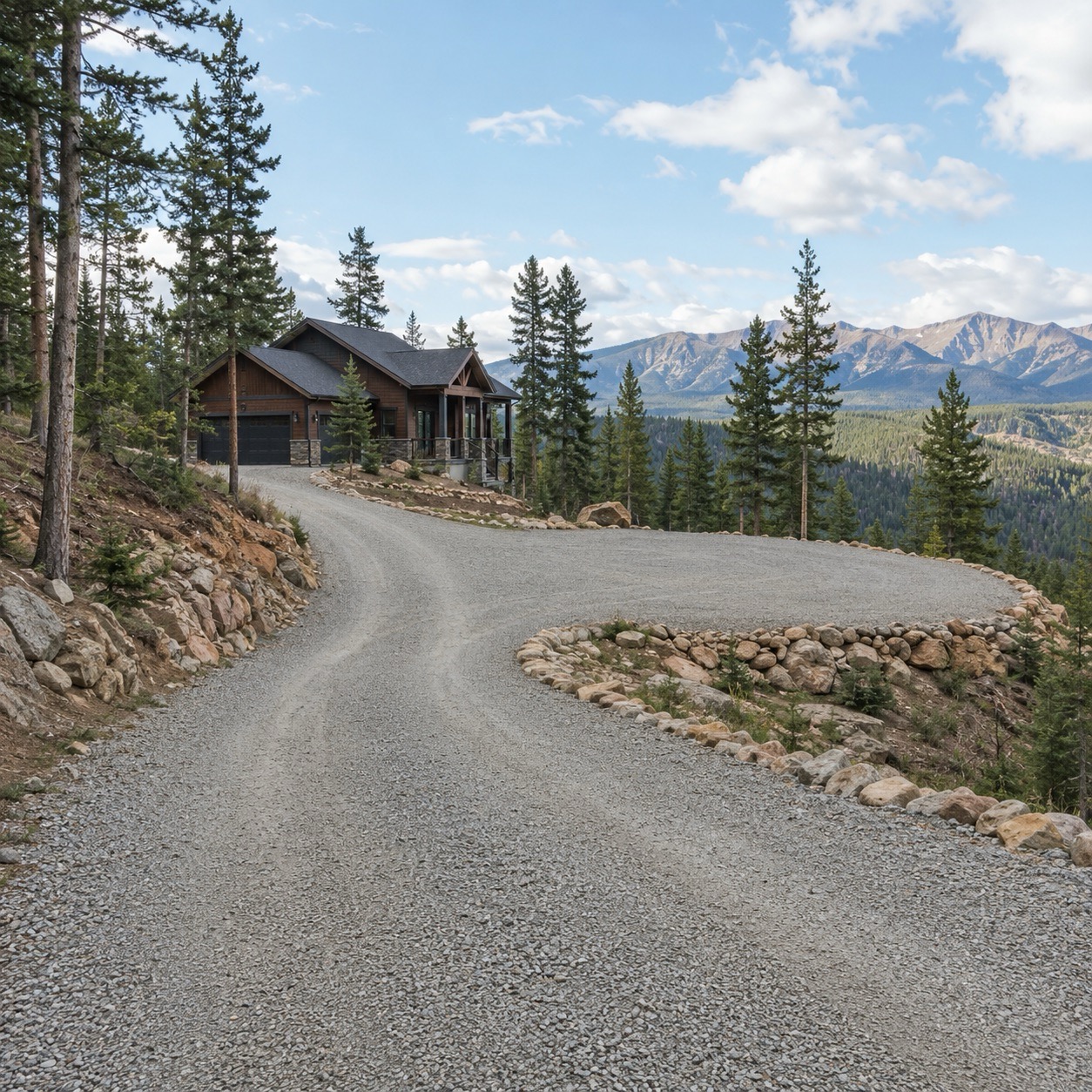

Gilpin County
Gilpin County issues Driveway Access Permits through Public Works at a flat fee of $100 (with Community Development and Road & Bridge involved in specification enforcement and culvert exceptions). Skip the permit and you’ll pay double. Grading permits kick in at 3,000 square feet of disturbance or 50 cubic yards of excavation.
The maximum grade is 12%, with the first 20 feet capped at 6%. The minimum culvert diameter is 18 inches when accessing a county-maintained road.
Here’s where Gilpin gets different from the other counties. If your driveway exceeds 12% grade, you’ll need written approval from the Timberline Fire Protection District, and your home will be required to have an NFPA 13D automatic sprinkler system with 20-minute water supply capacity. That sprinkler requirement also applies to any home over 3,600 square feet under the Gilpin County Residential Building Code, regardless of driveway grade.
Another important detail for anyone buying raw land in Gilpin County: existing non-maintained roads and old dirt tracks that don’t meet current driveway standards will not be grandfathered into new residential building permits. If you’re planning to build on a parcel with an old logging road for access, expect to bring that road up to current specs before your building permit gets approved.
The county’s driveway specifications (harmonized with the 2018 IFC/IWUIC adopted by Timberline Fire in May 2020) require a 12-foot minimum driveway width, 13’6″ vertical clearance, 30-foot inside turning radius, and fire apparatus access within 150 feet of any habitable structure.
Sources: Gilpin County Driveway Specifications, Amendment 2, Gilpin County Building Division
Park County
Park County issues Driveway Cut Permits through Environmental Health at a $150 application fee, with $75 per additional inspection and $50 for renewals. Permits are valid for one year. If you’re paving, that’s a separate $100 Paving Permit through the Public Works Right-of-Way Division.
Grade limits break down by section. The first 10 feet must slope away from the road at under 2%. From there, the first 50 feet can’t exceed 10%. After that, straight sections can go up to 12%, but switchbacks are capped at 8%. Any driveway over 200 feet must maintain an all-weather surface.
One requirement that catches people off guard in Park County: the county requires a Class E Contractor License(sometimes called an excavator’s license) for any digging work. It expires every December 31 and must be current before any permit gets processed.
Multiple fire protection districts operate within the county, including Platte Canyon FPD, Hartsel FPD, Jefferson-Como FPD, and Southern Park County FPD. Fire access standards follow IFC Section 503 and Appendix D as adopted by each district.
Note: Park County’s published fee schedule and driveway permit documents date from 2022. We recommend confirming current fees directly with the Park County Environmental Health Department at 719-836-4250.
Sources: Park County Driveway Cut Permit Information, Park County Land Use Regulations Article VII, Park County Paving/Repaving Application
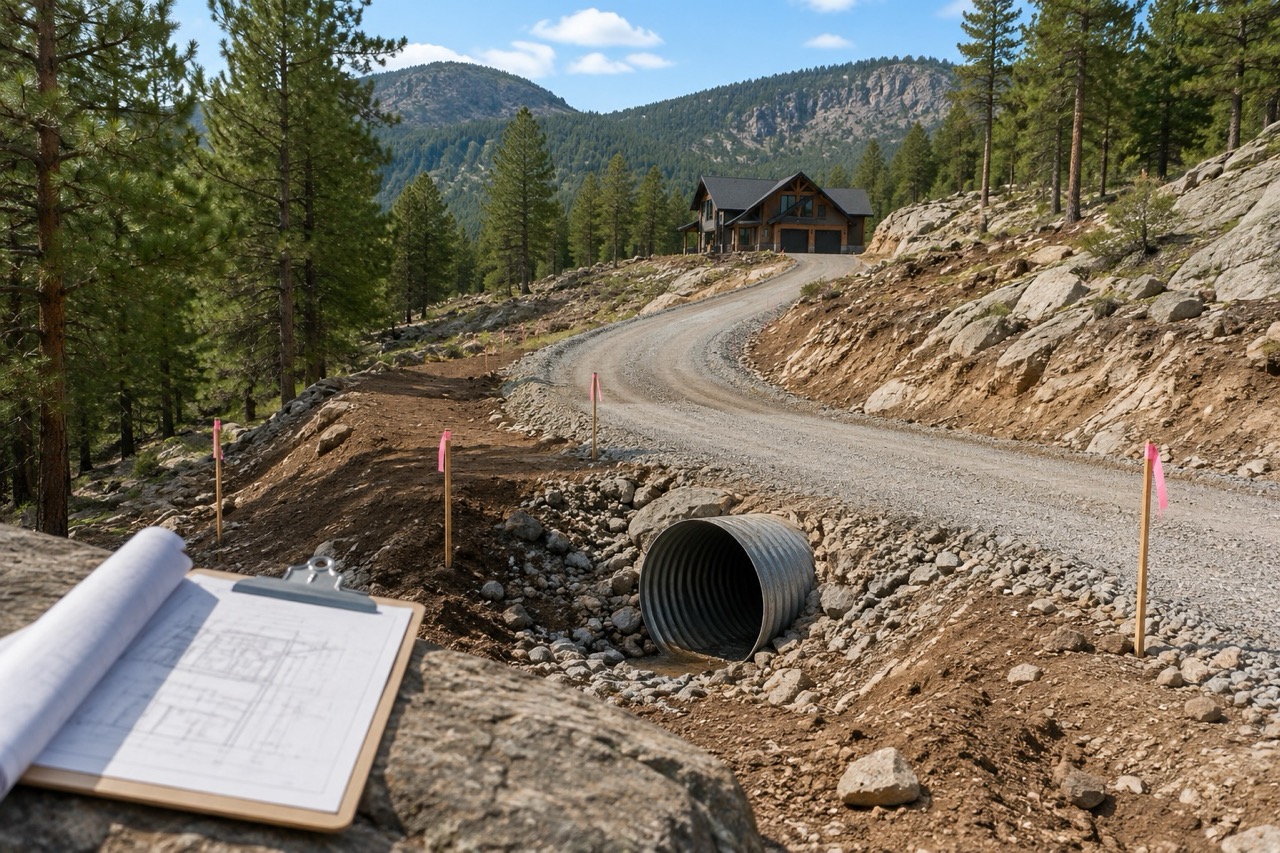

Summit County
Summit County governs driveway access through Chapter 5 of the Land Use and Development Code, specifically Sections 5300 (Access Permits) and 5400 (Right-of-Way Permits). The Engineering Department issues access permits while Road & Bridge administers right-of-way permits.
Grade limits are 8% for the first 25 feet, then 10% maximum after that. Minimum width is 12 feet for driveways under 200 feet, and 14 feet for anything longer. Driveways over 400 feet need an emergency vehicle turnaround. Paved driveways require a 4-inch compacted aggregate base plus 2-inch hot-mix asphalt.
Two Summit-specific requirements stand out. First, your property must have a snow storage area equal to 25% of the driveway plus parking area, positioned adjacent to (but not within) the right-of-way. Second, and this is the one that catches contractors by surprise: no right-of-way excavation is permitted on gravel or paved roads from November 1 through April 30. If your project timeline doesn’t account for this moratorium, you’ll be waiting until May.
If the natural slope exceeds 10%, a stamped topographic survey from a registered land surveyor is required. Slopes of 30% or greater trigger PE-designed roads, driveways, and foundations consistent with a soils report.
Sources: Summit County Planning & Engineering Building Permit Checklist, Summit County Right-of-Way Permits, Summit County Engineering Standards & Regulations
Douglas County
Douglas County issues driveway permits through the Building Division within the Department of Public Works Engineering. Properties in designated Wildfire Hazard Areas pay an additional $120 wildfire-mitigation inspection surcharge (covering preliminary and final inspections) on top of the standard permit fee.
The grade restrictions in the right-of-way are the strictest of any county in this list: 4% maximum within the ROW, compared to 8-10% in most other counties. Outside the right-of-way, the limit is the more standard 10%. Driveways must include a 4-inch dip before the right-of-way to prevent runoff from your property onto the public road.
Culvert requirements are material-restrictive. Douglas County allows CMP or RCP only in the right-of-way, with flared end sections or approved riprap. Minimum culvert diameter is 15 inches with 6 inches of cover, designed to pass a 10-year storm, with downstream banks armored for a 100-year overtopping event.
Driveways 150 feet or longer require turnarounds (12-foot width, 36-foot centerline radius for circular turns, or a 40×20-foot hammerhead). In Wildfire Hazard Areas, driveways over 400 feet need turnouts at 400-foot intervals.
Sources: Douglas County Driveway Permit Page, Douglas County Driveway Regulations, Douglas County Typical Driveway Construction Standards
What Triggers the Need for a Permit
Across all six counties, a driveway permit is required for any new driveway connecting to a county road, any modification to an existing driveway that changes width, grade, or drainage, and any project that adds impervious surface or disturbs natural drainage patterns. If your driveway connects to a state highway (US-6, US-40, US-285, SH-74, SH-119), you’ll also need a separate CDOT Access Permit regardless of which county you’re in.
Fire access is a baseline requirement everywhere, though the specific code edition and local amendments vary by fire district. Most mountain districts have adopted either the 2018 or 2021 International Fire Code. Common residential driveway standards across Colorado’s mountain fire districts include a minimum 12-foot driving surface width (some districts require wider), 13’6″ vertical clearance, turnarounds for dead ends exceeding 150 feet, and an all-weather surface capable of supporting a 75,000-pound fire apparatus. Check with your local fire protection district for the exact standards that apply to your property, as amendments and additional requirements vary.
Sources: CDOT Access Permits, Colorado DFPC Fire Code 2021 (applies to DFPC-jurisdictional buildings), Colorado IWUIC 2021
We Handle the Permits So You Don’t Have To
Six counties, six different rule books. Different grade limits, different culvert specs, different engineering requirements, and different fees. If you’re building a new driveway or upgrading an existing one on a mountain property, we handle permitting consultation across Jefferson, Clear Creek, Gilpin, Park, Summit, and Douglas counties. We know what each county wants to see, and we get it right the first time so your project doesn’t stall at the permit desk.
Contact us about your driveway project
Mountainside Land Services | 720-303-1449 | Serving Colorado’s Front Range mountain communities