
There’s no single right answer. The best material for your driveway depends on your specific property. A steep, sun-exposed drive above Evergreen has different needs than a shaded, flat approach on a north-facing lot in Summit County. Here’s how the two materials compare across the factors that actually matter on mountain properties.

What Each Material Is
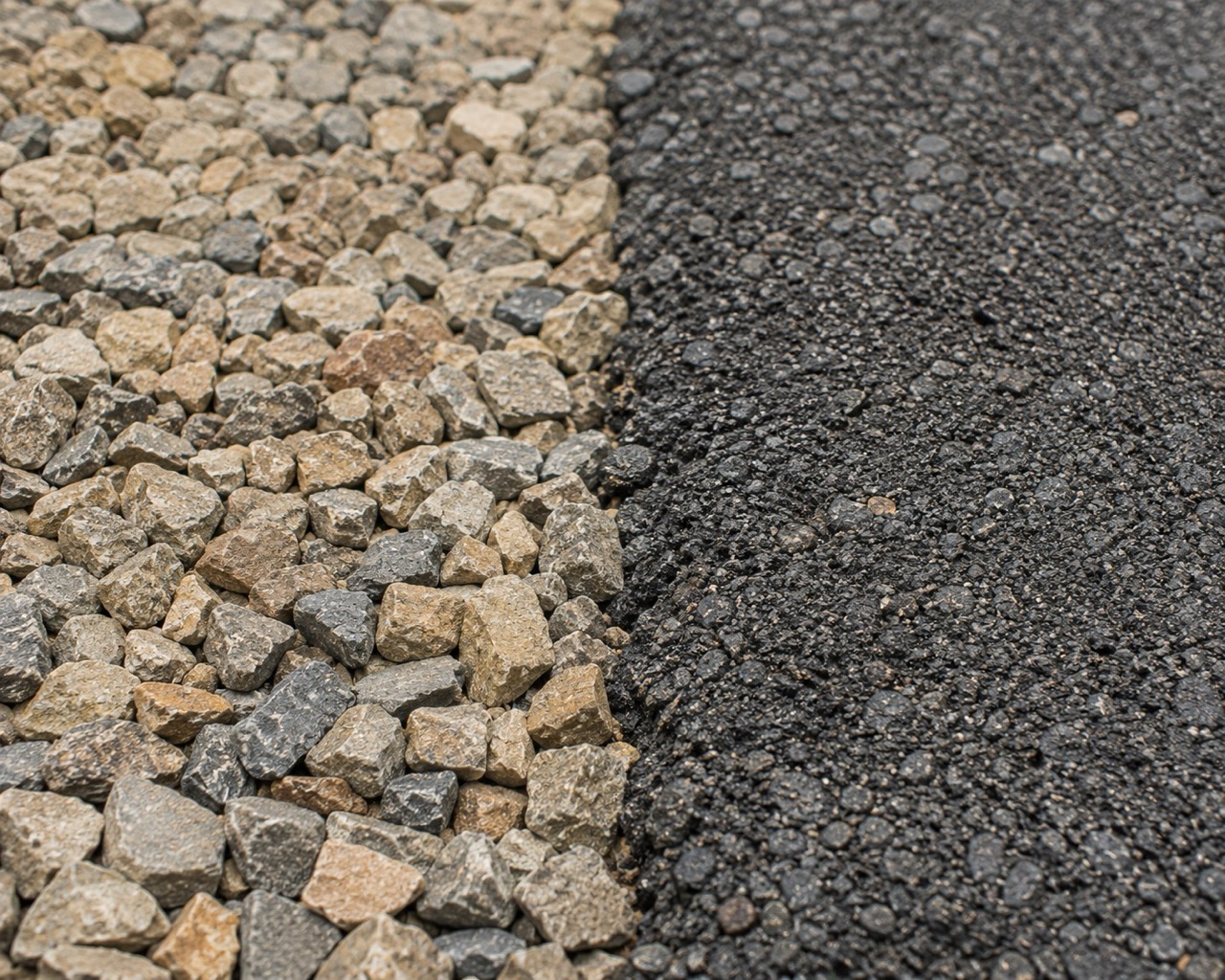
Class 6 road base is crushed aggregate blended with fine particles. The angular pieces interlock under compaction, and the fines fill gaps between larger stones to create a firm, stable surface. It drains well, looks natural, and is the standard base material specified by most Colorado counties for unpaved driveways. It does not self-bind. Over time, traffic and weather loosen the surface and it needs regrading and fresh material.
Recycled asphalt pavement (RAP), also called asphalt millings, is reclaimed pavement that’s been ground into gravel-sized pieces. The key difference is that RAP retains 3-6% residual asphalt cement from its previous life as pavement (Asphalt Coatings Company, Denver). When spread and compacted, that residual binder reactivates in summer heat. Colorado’s high-altitude sun can push a dark RAP surface to 140-160°F on a clear day, which softens the bitumen enough for particles to bond at their contact points. Over one to three summers, a properly installed RAP surface gradually hardens into something that behaves closer to pavement than loose gravel.
What They Cost in Colorado
RAP runs roughly half the material cost of Class 6 road base at Colorado suppliers.
Current Colorado pricing:
- Class 6 road base: $39.95 per ton — Ainsworth Rock Sales, Denver
- Screened asphalt millings: $22.50 per ton — Aggregate Markets, Louisville
- Unscreened millings: $25.00 per ton — Aggregate Markets, Louisville
- Recycled asphalt #53: $20.00 per ton — Aggregate Markets, Louisville
For comparison, decorative gravels run much higher: pea gravel at $65.95/ton, mountain granite at $76.95/ton, and Colorado rose at $93.95/ton (Ainsworth Rock Sales).
What that means for a typical driveway: A 12-foot-wide, 200-foot-long drive (2,400 square feet) at 4 inches of depth needs roughly 32-36 tons of material. At Class 6 pricing, that’s approximately $1,280-$1,440 in material alone. The same coverage in screened RAP runs $720-$810. The $500-$600 savings on material scales up fast on longer mountain driveways.
Installed costs (including grading, compaction, and equipment) run $1-$3 per square foot for gravel and $3-$8 per square foot for RAP (Asphalt Millings Cost Guide, Asphapro). RAP’s higher installed cost reflects the additional compaction work needed to activate the binder properly.
How They Perform on Mountain Grades
This is where the two materials diverge most, and where the choice matters most for mountain properties.
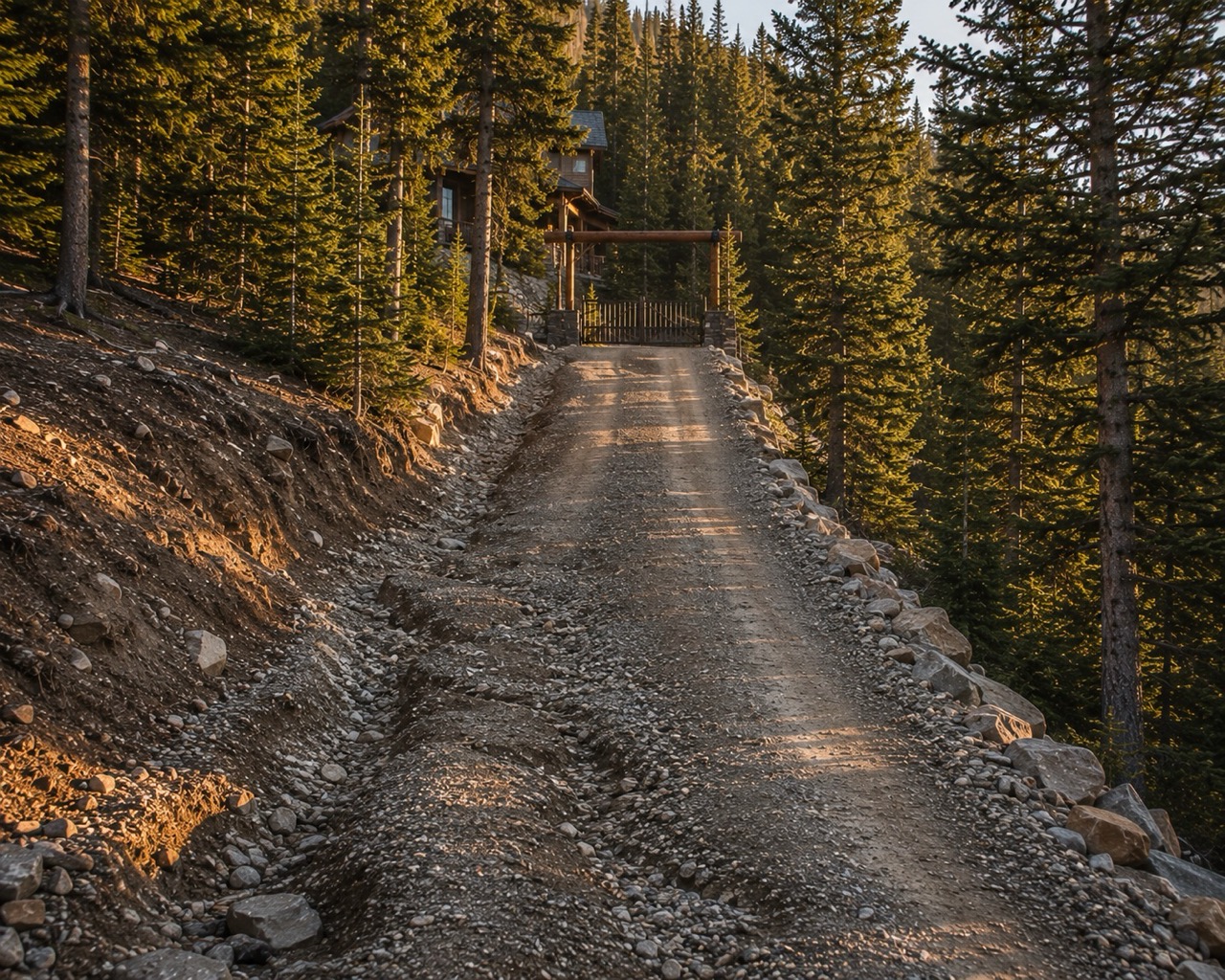
Above 10% grade, RAP outperforms gravel. The residual bitumen bonds particles together after compaction and sun exposure, creating a surface that resists washing downhill during runoff. Contractor and homeowner reports are consistent on this point: users who switched from gravel to RAP on steep mountain drives describe gravel “chasing down the driveway every time it rained” while compacted RAP held in place for 10-15+ years.
Class 6 road base performs reasonably well on moderate grades because the angular fines interlock and create a semi-bound surface. It’s significantly better than rounded pea gravel or river rock on slopes. But above roughly 12-15% grade, even well-compacted Class 6 starts migrating downhill under heavy rain and snowmelt. Gravel on steep grades requires more frequent regrading and top-dressing, which adds up over time.
The critical exception with RAP: shaded, north-facing driveways. The self-binding mechanism depends on solar heat. Driveways under heavy tree canopy or on north-facing slopes that rarely see direct sun may never develop a fully bonded surface. Colorado contractors and forum users consistently report that shaded sections “never set up” the way sun-exposed sections do. On a heavily shaded lot, RAP needs a chemical rejuvenator applied at installation and again in year two to compensate for the lack of solar activation. Without it, you’re paying more for material that performs like expensive gravel.
For grades over 15%, most Colorado mountain counties effectively require paved surfaces for fire apparatus access. RAP can satisfy “all-weather driving capability” where local code permits it, but loose gravel often does not.

Freeze-Thaw, Plowing, and Long-Term Maintenance
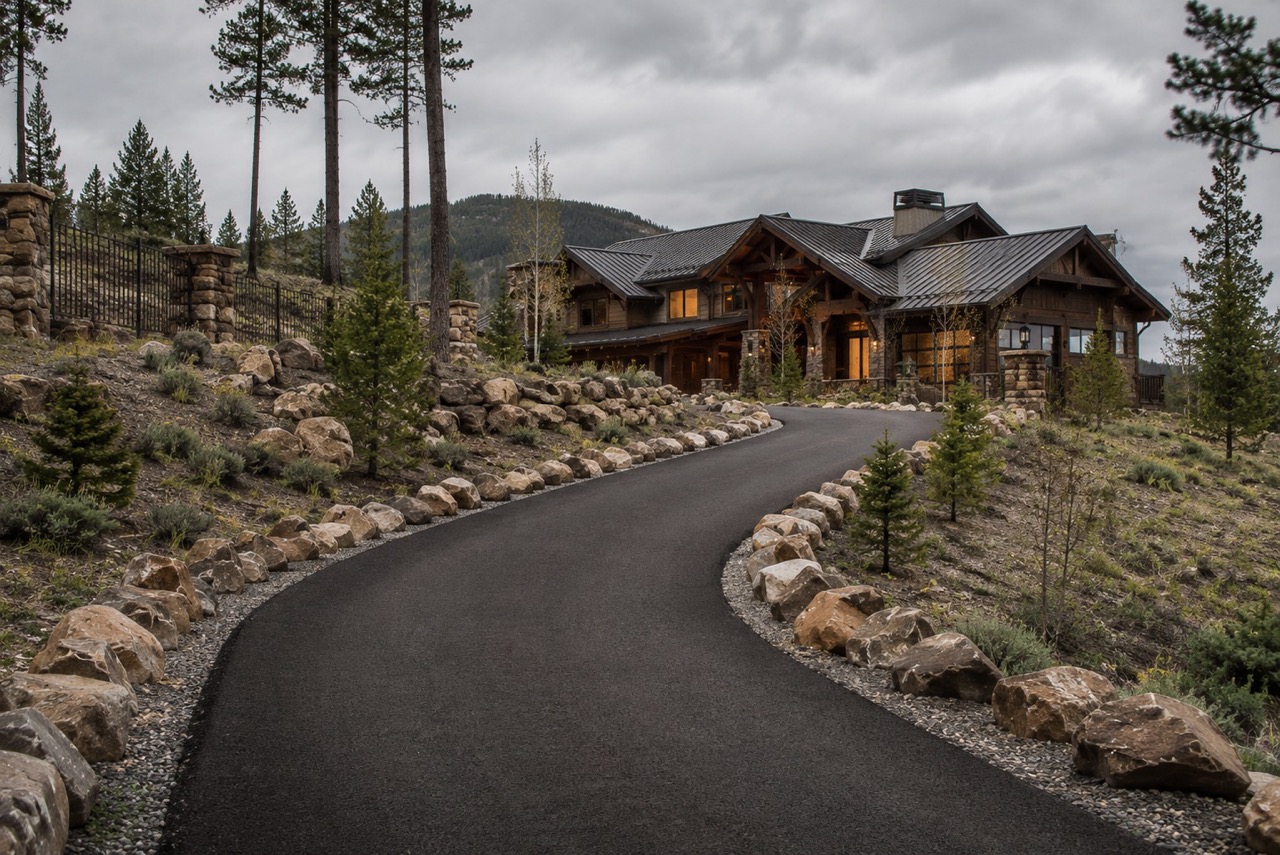
Snow and ice: RAP’s dark surface absorbs more solar radiation than light-colored gravel, which means it melts snow and ice faster. In Colorado’s mountains, where intense daytime sun can thaw surfaces even when air temperatures are below freezing, this difference is noticeable. Gravel reflects more sunlight and stays frozen longer.
Plowing: RAP plows significantly cleaner than gravel. The bonded surface stays in place under a plow blade, so you’re not scraping material off the driveway with every pass. Gravel displaces under plowing, building up berms on the sides and thinning the driving surface over time. After a few winters of plowing, gravel driveways need material replaced. RAP driveways generally don’t.
Drainage: Gravel is more permeable than compacted RAP. Water moves through a gravel surface more freely, which can be an advantage on flat or gently sloped driveways where standing water is a concern. Compacted RAP sheds water off the surface, which is better on grades (less water soaking into the base) but can create runoff issues on flat sections without proper crown.
Maintenance and lifespan:
- Gravel: Regrading every 1-3 years. Top-dressing with fresh material every 3-5 years. Expected lifespan 10-25 years with ongoing maintenance (Hello Gravel, Berthoud CO).
- RAP: Occasional re-compaction. Optional rejuvenator application every 3-5 years. Expected lifespan 20-30 years (Asphapro). Lower ongoing maintenance cost over the life of the driveway.

When to Pick Which
Sun-exposed, moderate grades (under 10%) at 5,500-9,000 feet — Golden, Evergreen, Conifer, parts of Douglas County. Either material works well here. Class 6 is cheapest to install. RAP is the better long-term value if you want lower maintenance and a surface that holds up to plowing.
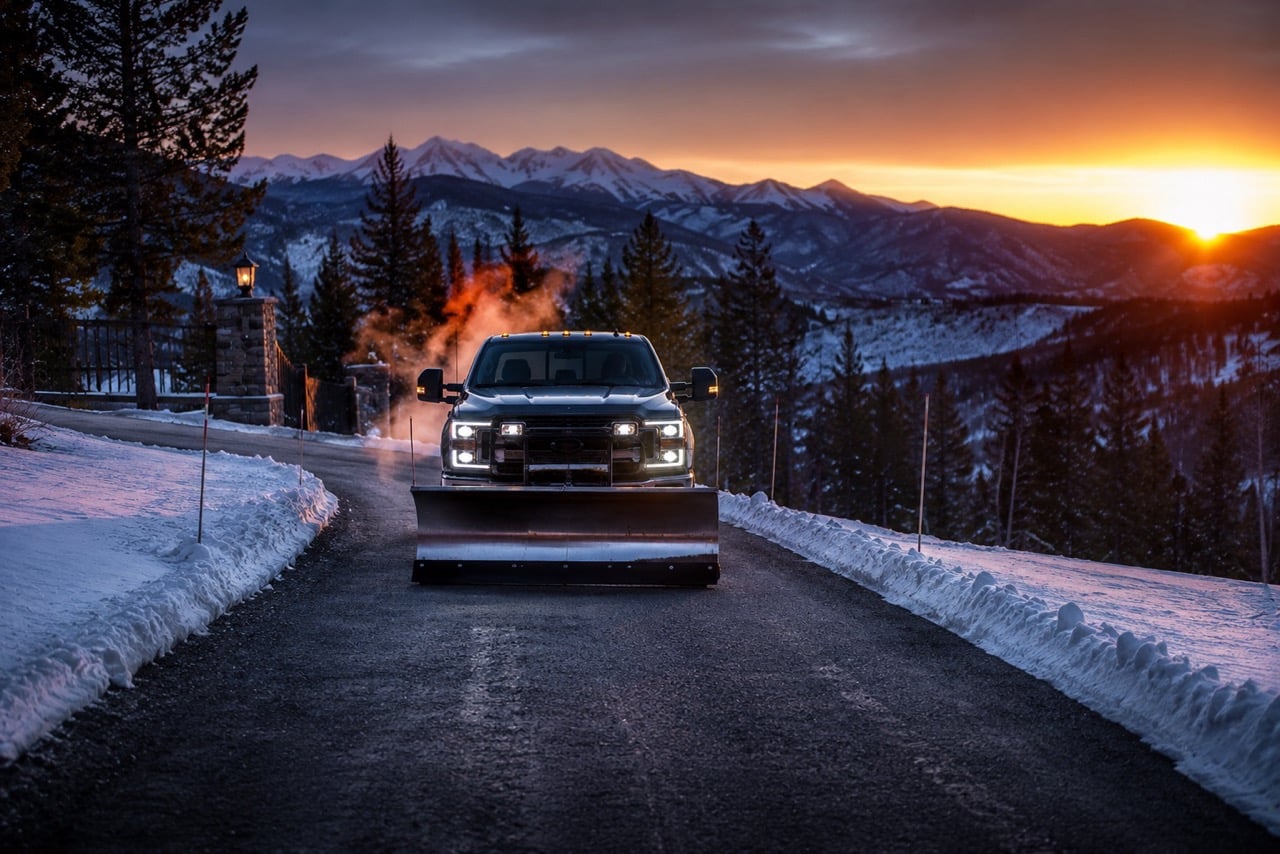
Steep grades (10-15%) at 7,500-9,500 feet — Bailey, Nederland, parts of Gilpin County. RAP is the stronger choice. Use screened millings at 4-6 inches thick on a compacted Class 6 base, compact with a vibratory roller, and consider a rejuvenator if sections are shaded.
Shaded, north-facing drives at any elevation — Class 6 is the safer pick unless you’re willing to invest in chemical rejuvenator at install and in year two to help RAP bind without full sun exposure.
Properties near wells, streams, or wetlands — Class 6 or angular crushed stone. RAP is classified as a beneficial-use material by the Colorado Department of Public Health and Environment, but it can leach trace metals in acidic conditions. It should not be placed within 100 feet of water bodies or wells without a beneficial-use determination.
HOA-restricted mountain communities — Class 6 or decorative crushed stone. RAP’s dark gray-black color looks like old pavement, and architectural review committees in many Summit and Douglas County HOAs will reject it on aesthetic grounds. Check your CC&Rs before ordering material.
Long rural driveways (500+ feet) with moderate grade on working properties — RAP is the economic winner. At $20-$30 per ton and with self-binding behavior that reduces maintenance frequency, it produces the lowest cost per foot over a 20-year period.

We’ll Help You Pick the Right Material
Every mountain property is different. We’ll look at your grade, your sun exposure, your soil, and your budget and recommend the material that makes the most sense for your driveway. If RAP is the right call, we install it with proper compaction and base prep. If gravel is the better fit, we spec the right product for your conditions.
Contact us about your driveway project
Mountainside Land Services | 720-303-1449 | Serving Colorado’s Front Range mountain communities