
Spring runoff is the single most damaging event your mountain driveway faces every year. Snowmelt concentrates on the driving surface, finds every low spot and weak point, and carries gravel, fines, and base material downhill. A driveway that looked fine in December can have rills, washouts, and clogged culverts by April.
And 2026 is running ahead of schedule. According to NRCS data reported by Coyote Gulch, statewide Colorado snowpack hit just 22% of the 30-year median by April 1, 2026. Snowpack peaked 4-6 weeks earlier than normal across most basins. March temperatures averaged 9°F above normal, pushing melt well ahead of the typical timeline. If you’re waiting until Memorial Day to deal with your driveway, you’ve already missed the window this year.
How Runoff Damages Mountain Driveways
Snowmelt doesn’t just flow over your driveway. It actively tears it apart through several mechanisms that compound each other.
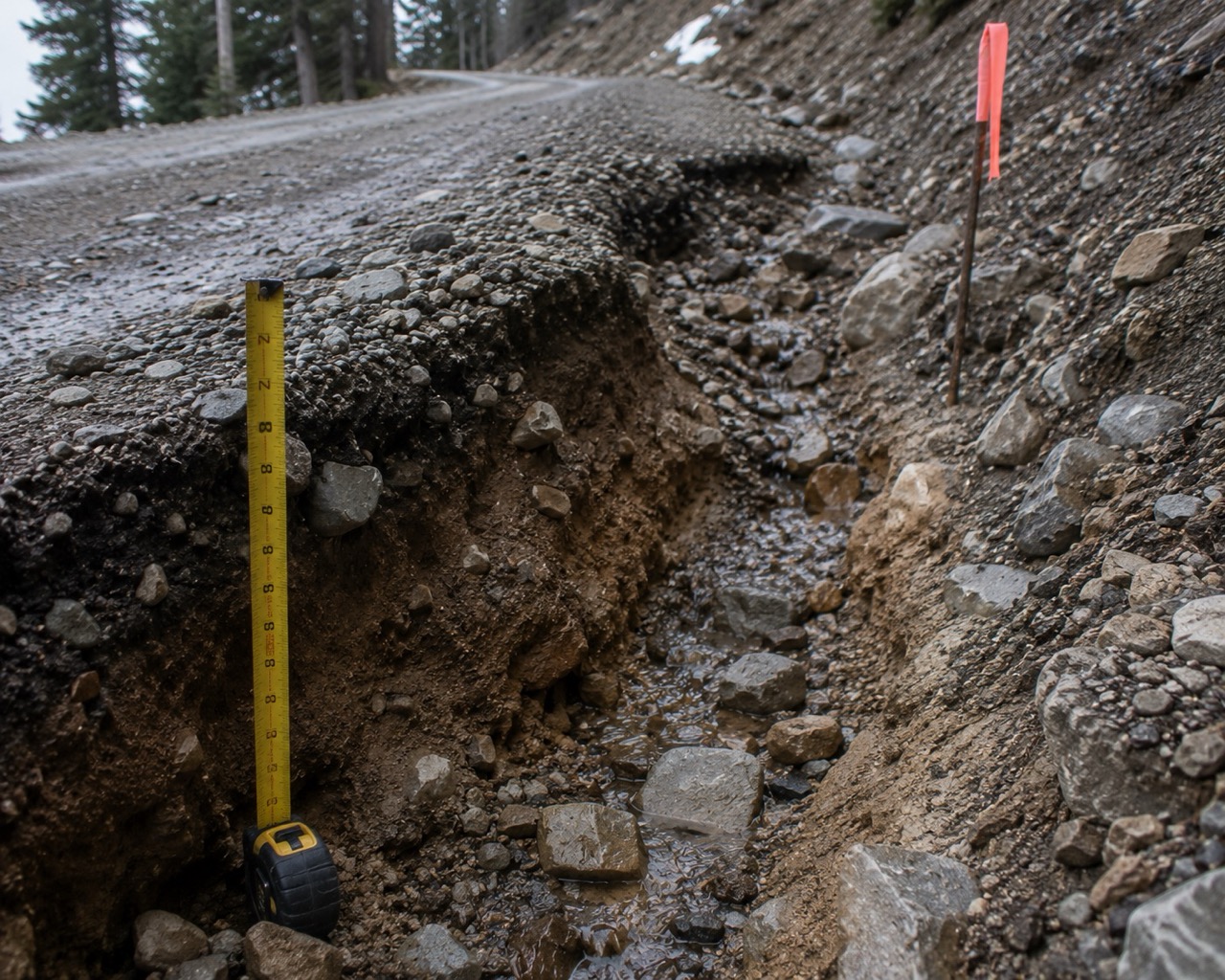
Sheet flow is the first stage. Once the winter crown has been flattened by plowing, water spreads across the full surface instead of sheeting off the sides. That moving water strips fine material out of the gravel, leaving behind loose, unconsolidated aggregate that ruts easily.
Rilling and gullying start on any section with grade. Erosion force scales with the square of water velocity, so even a small increase in slope angle dramatically increases the damage. The USDA caps recommended unpaved road grades at 10% specifically because erosion above that threshold becomes difficult to control (USDA Forest Service).
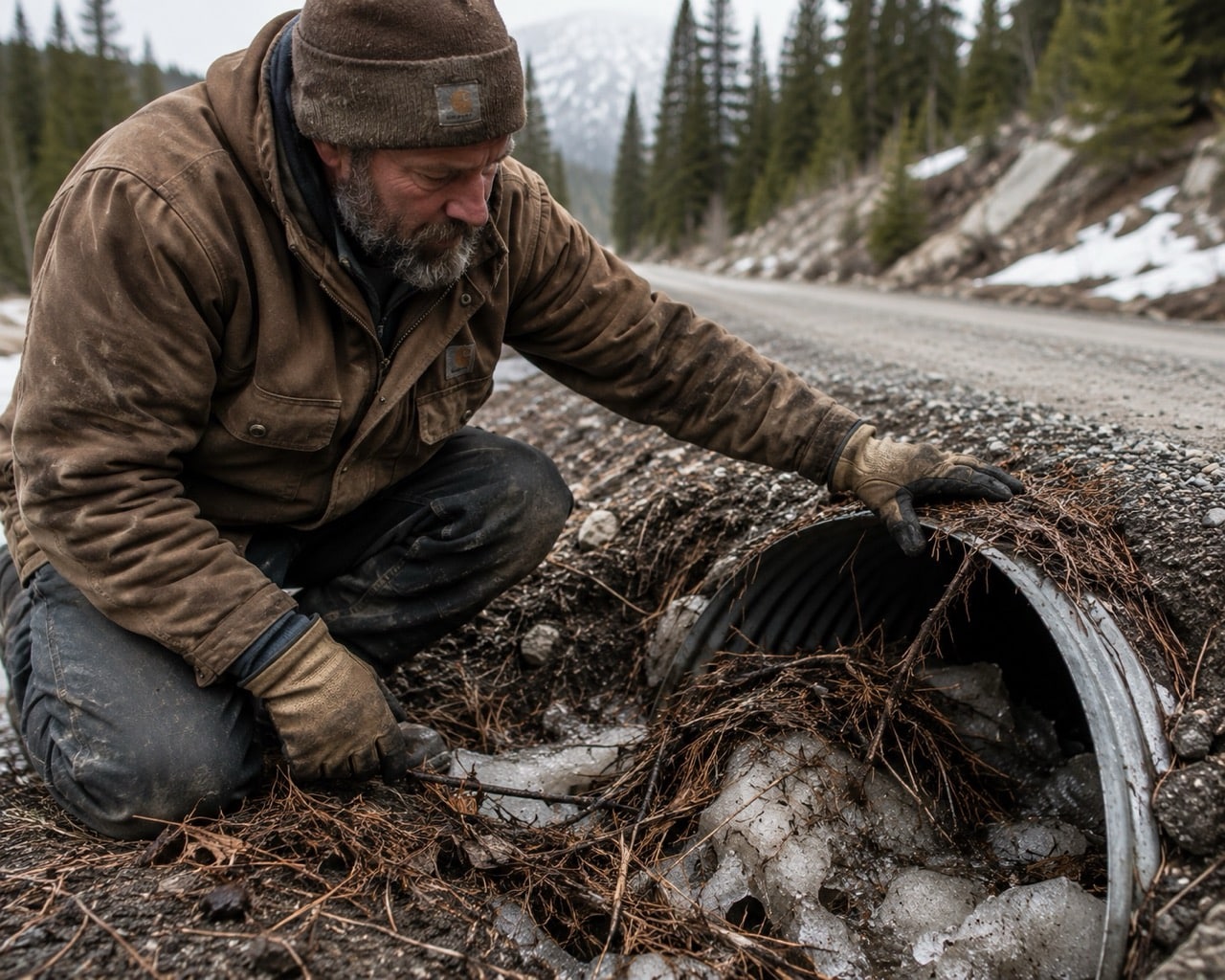
Culvert plugging happens when leaves, pine needles, ice, and sediment block more than about 20% of the pipe opening. Once flow is restricted, water overtops the driveway at the crossing and starts cutting into the embankment on both sides. This is how $200 worth of debris turns into a $1,500-$4,000 culvert replacement.
Base saturation is the hidden damage. Colorado’s decomposed granite soils lose bearing capacity when saturated. When meltwater soaks into the subgrade and then refreezes overnight, it heaves and fractures the base layer from below. The surface looks fine until the first heavy vehicle drives over it and punches through.

The Pre-Season Checklist
Do this work in late winter or early spring, before peak melt hits your elevation. In 2026, that means now for properties below 9,000 feet, and late April for properties above 9,500 feet.
Walk the full driveway during a thaw day. Bring spray paint or flagging tape. Mark every low spot where water is pooling, every section where the crown has flattened, and every place where snowplow berms are blocking drainage off the sides.
Clear every culvert inlet and outlet. Remove ice, snow, leaves, pine needles, and sediment by hand or with hot water. Do not wait until melt is actively flowing. Inspect each pipe for crushing, rust-through, or separated joints. A culvert that’s 50% blocked going into runoff season will be 100% blocked within a week of heavy melt.
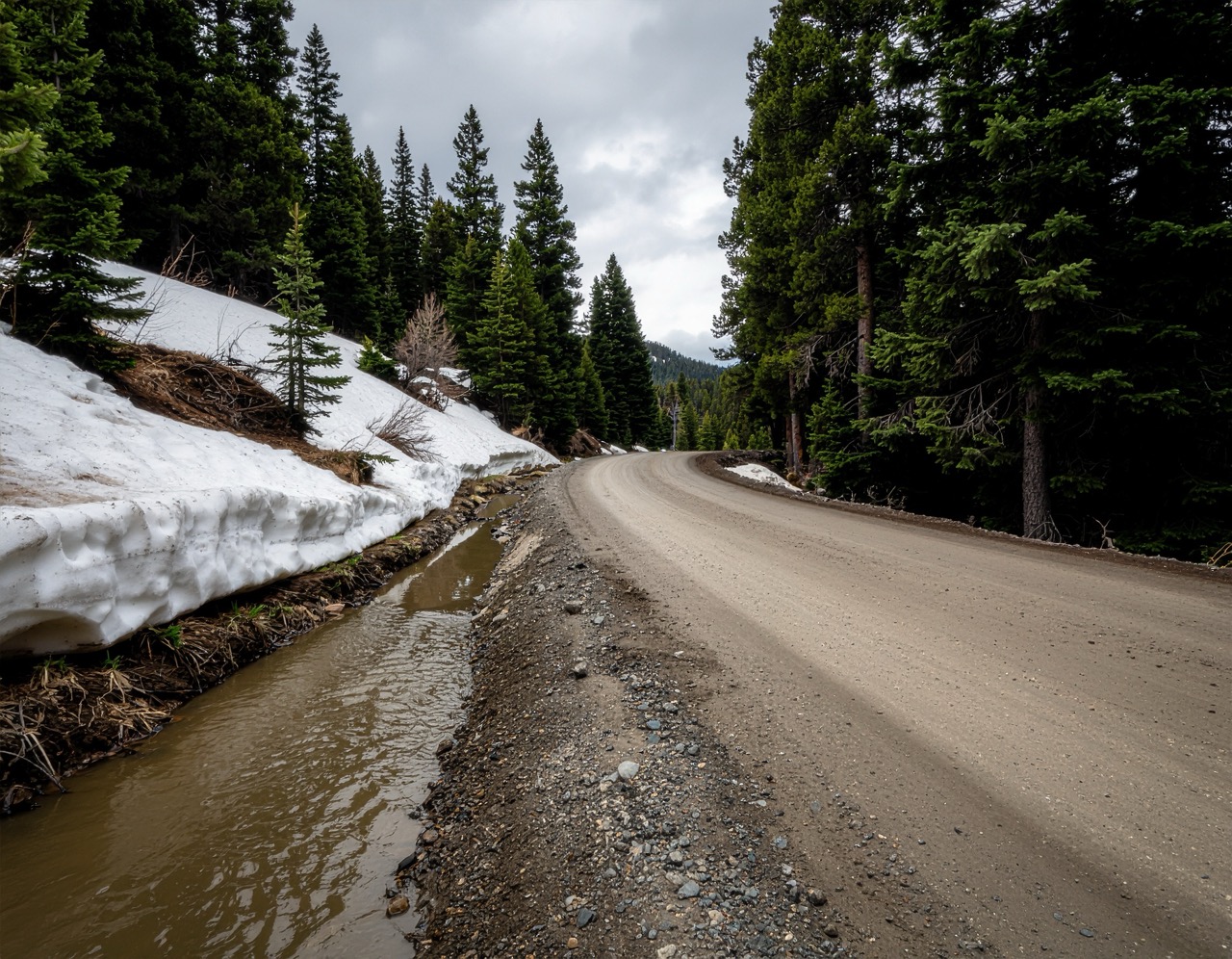
Clear ditches and drainage paths. Snowplow berms along the driveway edges often block the very channels that are supposed to carry water away from the surface. Break through these berms at regular intervals so meltwater has somewhere to go besides down the middle of your driveway.
Check water bars and rolling dips. If your driveway has water bars (angled berms that divert water off the surface), check that plowing hasn’t flattened or damaged them. Rolling dips serve the same function but ride smoother under tires. Both need to be intact before runoff starts.
Remove uphill snow banks. Large snow accumulations on the uphill side of the driveway will melt and concentrate water directly onto the driving surface. Spread them out or redirect melt paths away from the road.
This walkthrough takes an hour or two. Doing it before peak melt is the cheapest maintenance you’ll do all year.

When to Regrade After Snowmelt
Timing matters more than most homeowners realize. Grade too early and the work won’t hold. Wait too long and you’re fighting damage that could have been prevented.
Don’t grade on frozen ground. The material won’t compact properly, and the work will fail as soon as the ground thaws underneath.
Don’t grade during active mud season. When the subgrade is saturated, equipment pushes material around instead of compacting it. Running a grader or roller over waterlogged base material pumps fines to the surface and makes the problem worse.
The right window is when the surface is damp but firm. Contractors look for 6-10% moisture content in the material. It should feel damp to the touch but not stick to your boots. At this moisture level, the fines in the road base activate as binder and lock the aggregate together during compaction.
Normal-year timing by elevation:
- 7,000-9,000 feet (Evergreen, Conifer, Bailey, Black Hawk): mid-May to June
- 9,000-10,000 feet (Nederland, Fairplay, most of Gilpin): June
- Above 10,000 feet (upper Summit, high Park County): late June through July
In 2026, move everything 2-4 weeks earlier. With snowpack at 22% of median and peak melt running well ahead of schedule, the grading windows are opening sooner than usual across every elevation band. Properties below 9,000 feet may already be ready by late April this year.
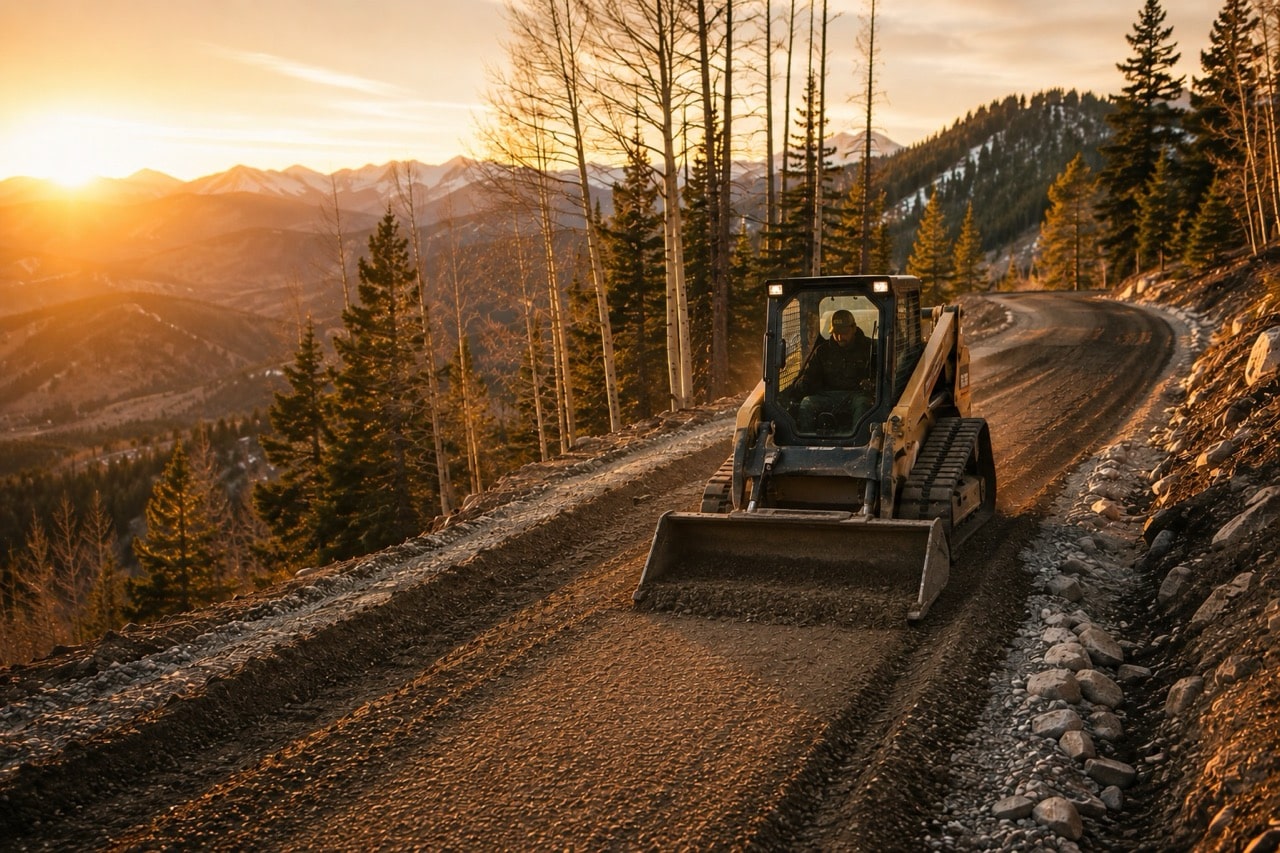
The grading itself should re-establish a 2-4% crown (roughly half an inch per foot of driveway width), compact material in 3-4 inch lifts, and use angular crushed rock on steeper sections because it interlocks and resists migration better than rounded stone.

Prevention vs. Repair Costs
The math on pre-season maintenance is clear. Every dollar spent before runoff saves you several dollars after.
Pre-season costs:
- Annual grading for a 400-600 foot mountain drive: $500-$1,500
- Culvert hand-cleaning: $150-$500
- Silt socks (erosion control tubes): $3-$8 per linear foot installed
- Water bar repair or installation: $75-$150 each
Post-runoff repair costs:
- Pothole patching: $3-$6 per square foot
- Drainage system retrofit: $2,000-$5,500
- Culvert replacement (18-inch residential pipe): $1,500-$4,000
- Retaining wall for a failed slope section: $12,000+
The industry rule of thumb: every $1 in pre-season maintenance saves $5-$10 in post-washout repairs. A $500 spring grading that prevents drainage failure is cheaper than a $5,000 rebuild after the damage is done.
The properties that cost the least to maintain over time are the ones where the owner gets ahead of runoff season every year instead of reacting to damage after it happens.

Schedule a Pre-Season Assessment
If your driveway took a beating last winter, or if you’re not sure whether your culverts and drainage are ready for this year’s melt, get it looked at before the ground dries out and the damage sets in. We’ll walk your driveway, check your drainage, and tell you what needs attention before it becomes an expensive problem.
Contact us about spring driveway maintenance
Mountainside Land Services | 720-303-1449 | Serving Colorado’s Front Range mountain communities