
Trying to understand what affects excavation cost in Colorado? This guide breaks down how project size and depth, soil conditions, site access, and permitting requirements can change an excavation estimate. The takeaway: realistic excavation pricing starts with the conditions on your property, not a generic cost-per-yard number.
Two excavation projects can look almost identical on paper and end up with very different price tags.
The reason is simple: contractors are not pricing the size of a hole. They are pricing the amount of work required to create it.
That includes how much material has to move, what is underground, whether equipment can work efficiently, and what the property requires before digging even begins. On Colorado mountain properties, those differences can become especially important because terrain, access, and ground conditions can change quickly from one site to another.
If you are trying to understand an excavation estimate, these are the four factors that usually matter most.
1. Size and Depth Change More Than the Amount of Dirt
The larger the excavation, the more material has to be cut, moved, loaded, spread, or hauled away. That part is straightforward. But depth can affect more than volume.
A shallow excavation on an open site may allow equipment to work efficiently from one position. A deeper cut can require more repositioning, additional material handling, different machine setups, or extra safety measures depending on how the excavation is being used.
Trenching is a good example. OSHA requires protective systems for most trenches 5 feet or deeper when employees are working inside them, unless the excavation is made entirely in stable rock. Those systems can include sloping, benching, shoring, or shielding. OSHA also requires excavations deeper than 20 feet to use a protective system designed or approved by a registered professional engineer. You can review the agency’s trenching and excavation guidance here.
That does not mean every deep excavation suddenly becomes expensive at a specific depth. It means depth can change how the work has to be performed.
The amount of material still matters, but so do the conditions created by the excavation itself.
For budgeting purposes, this is why a simple cost-per-yard number can only tell part of the story. Two projects with similar cubic yardage can require very different machine time if one is broad and shallow while the other is narrow, deep, and difficult to work around.

2. Soil Conditions Can Change the Entire Dig
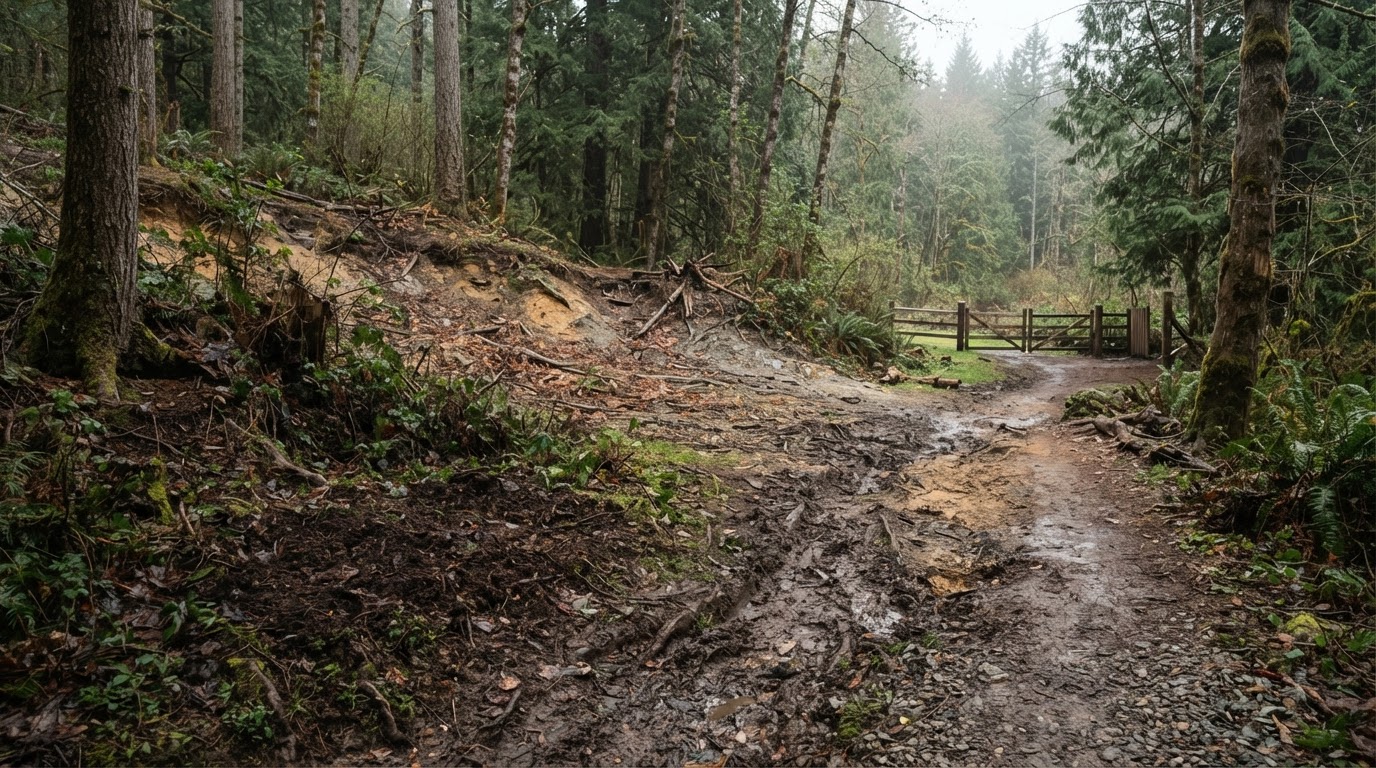
Before excavation starts, the ground may look ordinary. And once the bucket goes in, the conditions underneath can change the job quickly.
Loose, workable soil is generally faster to excavate than dense clay, heavily compacted ground, large boulders, or competent bedrock. Harder material can reduce production, increase wear on equipment, and require different attachments or excavation methods.
Colorado adds another layer because soil and rock conditions can vary significantly over short distances.
The Colorado Geological Survey notes that expansive soil and rock occur throughout much of the state and that their behavior depends on local geology and moisture conditions. Other mountain properties may have shallow bedrock, fractured rock, loose colluvial material, or large buried boulders.
Those conditions affect excavation cost in different ways.
Dense clay may slow digging and become difficult to handle when wet. Large boulders may need to be worked around, removed individually, or broken before they can be moved. Bedrock can require hydraulic breakers, ripping, drilling, or, in specialized situations rock excavation methods that are completely different from ordinary digging.
The U.S. Army Corps of Engineers maintains a full engineering manual on blasting for rock excavation, which shows how far rock work can depart from normal soil excavation.
Most residential excavation projects will never involve blasting. The point is that “digging” is not one uniform task. The material underground determines how quickly equipment can work and what equipment is needed to work it.
That is one reason a contractor may hesitate to give a firm excavation price from a few photos or dimensions alone. Until the ground conditions are reasonably understood, one of the biggest cost variables may still be unknown.
3. Site Access Determines How Productive the Equipment Can Be
A machine may have the same hourly operating cost on two projects and produce very different amounts of work. Access is often the reason.
The Federal Highway Administration warns that construction production rates can vary considerably based on project size, geographic location, and site setting, even when the same type of work is being performed.
For excavation, that can come down to very practical questions.
Can the right-sized excavator reach the work area? Can a dump truck get in and turn around? Is there room to stockpile material? Can equipment work from a stable position, or does it have to keep moving? How far does excavated material need to travel before it can be placed, loaded, or hauled away?
A wide, relatively flat lot usually gives a crew more options.
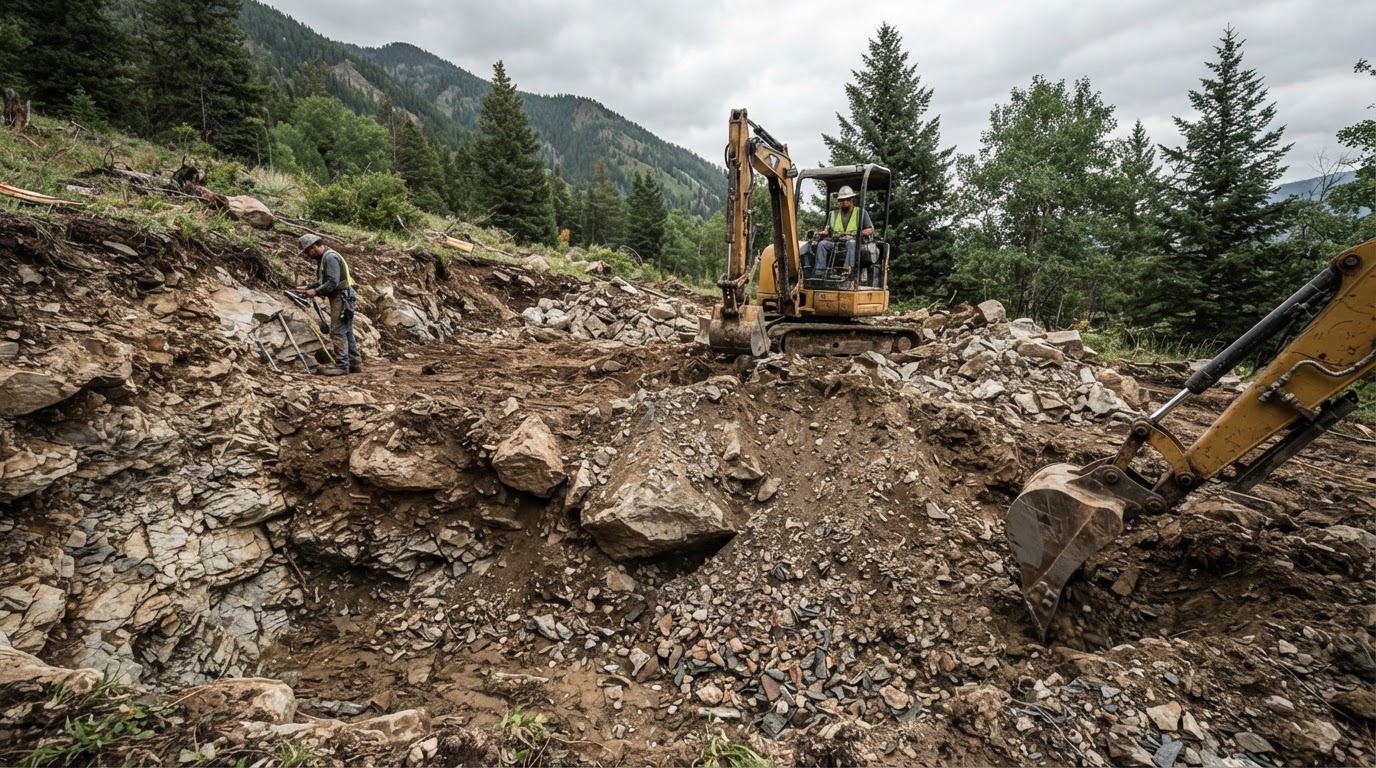
A narrow mountain driveway, steep approach, tight residential lot, or property with limited turnaround space may restrict the size of equipment that can be used. Smaller machines can still do excellent work, but they may need more cycles to move the same amount of material.
Tight access can also affect trucking.
If trucks cannot reach the excavation directly, material may need to be moved in stages before it can leave the property. If the site is remote, mobilization and haul time can become a larger part of the project. If usable material has to be imported, the same access restrictions affect every load coming in. The Environmental Protection Agency makes a similar point in its excavation guidance, noting that equipment selection changes when structures restrict access and that remote sites or distant disposal locations can increase the time required to complete excavation work.
This is why site access should be treated as a production issue, not just a convenience issue.
If equipment can work efficiently, more gets done in each hour. If every part of the job requires extra positioning, smaller equipment, or additional handling, the excavation estimate has to account for that time.

4. Some Excavation Costs Start Before the Excavator Arrives
Not every excavation project requires permits, surveys, soils reports, or environmental testing.
Some do. The important point is that these costs depend on the scope of work, the property, and the local jurisdiction.
Colorado mountain counties often have grading and excavation requirements tied to disturbance area, slope, drainage, or geologic conditions.
Clear Creek County, for example, requires grading and excavation permits for certain projects that disturb more than 800 square feet. Its standards also require topographic and boundary surveys for some work on slopes over 10 percent. You can review the county’s current grading and excavation standards here.
On steeper sites, additional engineering or geologic review may be required depending on what is being built and how the property will be disturbed.
Jefferson County has its own process. Depending on the project, required documents can include erosion-control plans, drainage information, grading plans, and geologic or soils investigations. Its mandatory application document guidanceshows how much those requirements can vary by project type.
That matters because the excavation budget may begin before equipment mobilizes.
A survey, engineering review, drainage plan, or geotechnical investigation is not part of the digging itself, but it may still be necessary to move the project forward.
Environmental testing belongs in the same category, but it should not be treated as a routine excavation cost. It becomes relevant when there is a reason to suspect contamination or when the project falls under specific environmental requirements. In those cases, testing, material handling, and disposal can add substantial cost before or during excavation.
The safest assumption is not that every excavation project needs these services. It is that local requirements should be checked before the budget is considered complete.
The Biggest Cost Driver Is Often the Unknown One
Most excavation estimates become easier to understand once the major variables are identified. Here are some questions that you can ask yourself, that will give you a hint on where you’re at:
- How much material needs to move?
- How deep does the work go?
- What is the ground made of?
- Can the right equipment reach the site?
- Where will excavated material go?
- Are permits, surveys, or technical reports required before work begins?
The more of those questions that can be answered before mobilization, the fewer surprises are left in the budget.
That is especially important on Colorado mountain properties, where one site can have good access and workable ground while another property nearby may involve steep approaches, restricted staging, shallow rock, or additional county requirements.
The excavation cost is not determined by one national number or one hourly machine rate. It is built from the conditions of the property and the way those conditions affect the work.
Get a Clearer Excavation Estimate Before Work Starts
Every property has different ground conditions, access, and site requirements. The sooner those are understood, the easier it is to build a realistic excavation budget.
Contact us and we’ll walk the property, look at the conditions that could affect the work, and help you understand what to expect before equipment arrives.