Hiring an excavation contractor for a flat lot in town is one thing. Hiring one for a steep, rocky property in Colorado’s high country is another. The mountain adds slope, rock, drainage problems, and access headaches that a general contractor may have never dealt with. The wrong choice can leave you with a washed-out driveway, a failed building pad, or a bill that keeps climbing.
Mountainside Land Services works on mountain terrain every day across Jefferson, Clear Creek, Gilpin, Park, Summit, and Douglas counties. Here is what to look for when you compare contractors, and the warning signs that tell you to keep looking.
Mountain Experience Is Not Optional
A contractor who is great on flat ground can still be lost on a 30 percent slope. Mountain work calls for judgment that only comes from doing it.
Ask any contractor you are considering:
- How many mountain jobs have they done? Look for recent work on terrain like yours, not just driveways in a flat subdivision.
- Can they show you examples? Photos, addresses, or references from nearby properties tell you more than a sales pitch.
- Do they know your area? Soil, rock, and drainage change from one drainage basin to the next. A contractor who already works in your county knows the local patterns.
Experience on the mountain is the single best predictor of how your job will turn out.
Reading Slope, Grade, Drainage, and Access
Good mountain excavation starts before any digging. It starts with reading the land.
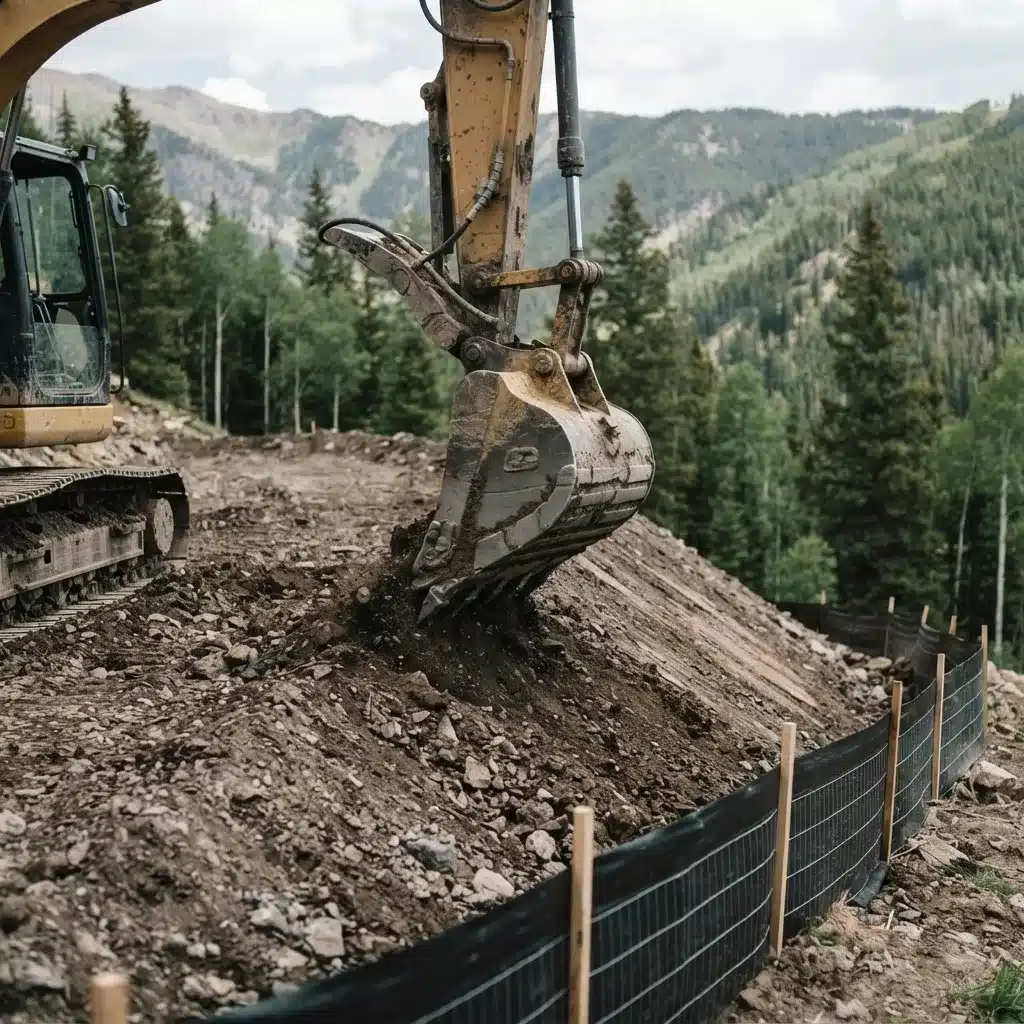
- Slope: Steeper ground means more cut and fill, more retaining, and more erosion risk. In Jefferson County, a slope of 30 percent or steeper can trigger a full grading permit on its own.
- Grade: The finished surface has to shed water away from your home and driveway, not toward them.
- Drainage: Water is the number one enemy of a mountain property. A contractor who plans for spring runoff and storm flow saves you from damage later.
- Access: Narrow driveways and tight switchbacks decide which equipment can even reach the site.
A contractor who walks your property and talks through all four of these is showing you they understand the work. One who jumps straight to a price is not.
Working With Rock and Difficult Terrain
Colorado’s mountains are full of rock, and rock changes everything. Hidden boulders and shallow bedrock can slow a dig, force a change in plan, and raise the cost.
A seasoned mountain contractor will:
- Expect rock and plan for it instead of being caught off guard.
- Have the right tools, including rock breakers, and the experience to use them safely.
- Tell you honestly that rock is hard to predict, and explain how they handle it if they hit more than expected.
A contractor who promises a flat price with no mention of rock has either not looked closely or is hoping you will not ask.
The Right Equipment for Mountain Lots
On a tight mountain site, the right-size machine matters more than the biggest one. The correct equipment fits the terrain and protects your property.
- Compact and mid-size excavators reach tight spaces and cause less damage to driveways and landscaping.
- Track machines handle steep, loose ground better than wheeled equipment.
- Proper hauling matters when there is nowhere on site to store the dirt.
The right contractor matches the machine to the job. The wrong one shows up with whatever is on the trailer and hopes it works.
Local Permitting and Site Planning Knowledge
This is where local knowledge pays off the most.
A contractor who works your county already knows:
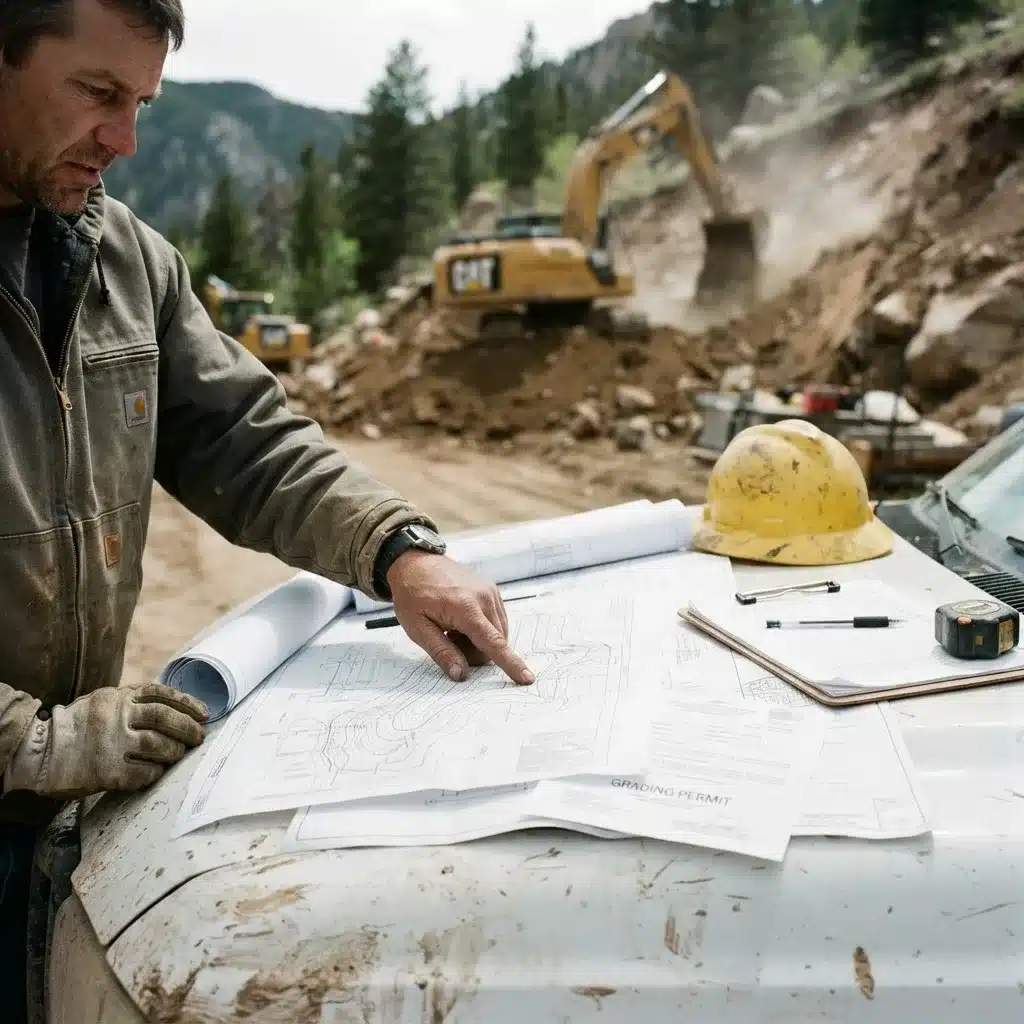
- When a project disturbing one acre or more needs a state stormwater permit from the Colorado Department of Public Health and Environment.
- When a smaller project still needs a county grading permit or a Notice of Intent. In Jefferson County, that can happen once disturbance passes half an acre, cuts and fills exceed ten vertical feet, or the slope hits 30 percent.
- What erosion control and soils reports the county will ask for on steep or hazard-prone lots.
Permitting mistakes cost time and money. A stop-work order can freeze your project for weeks. Hiring someone who handles this every day keeps your job moving.
Red Flags When Comparing Contractors
Some warning signs show up early. Watch for these:
- No site visit: A real estimate comes after someone walks the property. A number over the phone with no visit is a guess.
- Verbal-only estimates: Get the scope and price in writing so there are no surprises later.
- No permit talk: If a contractor never mentions permits on a job that clearly needs them, that is a problem.
- No insurance or references: Ask for proof of insurance and recent references, then actually call them.
- Wrong-size equipment: If the plan calls for machines too big for your access, expect property damage.
- A price that seems too low: It usually is, for the reasons below.
Why the Lowest Bid Is Not Always the Best Choice
A low bid feels good on paper. But on a mountain property, the cheapest number often hides the most risk.
A bid comes in low for a reason. Sometimes the contractor skipped the site visit and missed the rock. Sometimes they left out drainage, proper compaction, or erosion control. Sometimes they plan to add charges once the work starts and you are already committed.
The real cost of cutting corners shows up later:
- A building pad that settles because the fill was never compacted right.
- A driveway that washes out because drainage was skipped.
- A retaining wall that leans because it was never engineered.
Fixing these problems usually costs more than doing the work right the first time. A fair, detailed bid from a contractor who understands mountain terrain protects you from paying twice.
Hiring With Confidence
The best mountain excavation contractor is the one who knows your terrain, plans for slope and rock, handles permits, and puts an honest scope in writing. That is the standard Mountainside Land Services holds on every job across Colorado’s high country.
If you are comparing contractors for excavation and sitework or a driveway or access road, reach out for a free assessment and an honest look at your property.